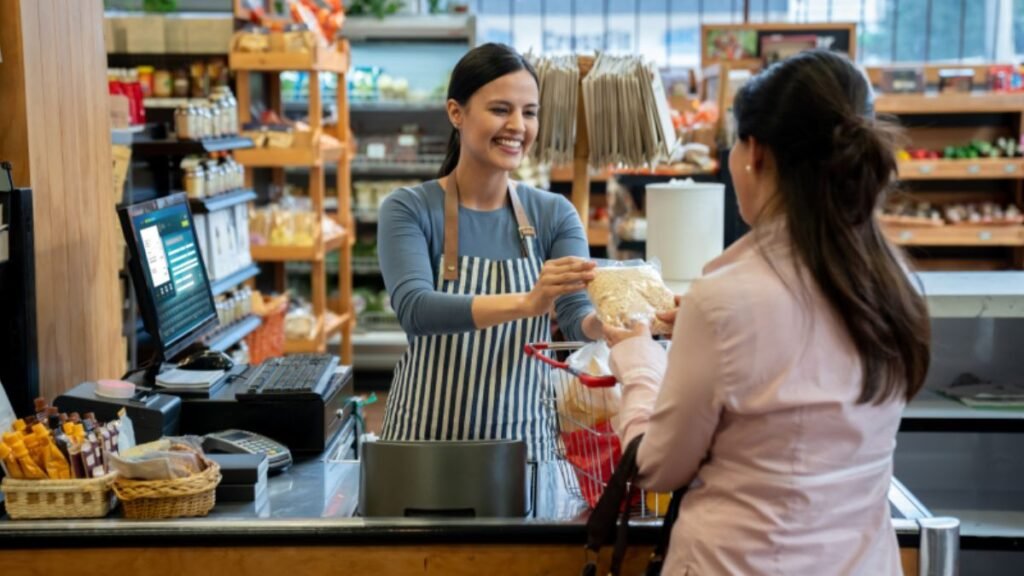

Psychology Reveals: In today’s world, the way we shop is changing rapidly. Self-checkout machines have now become commonplace—fast, easy, and convenient. A large number of people use them regularly because they save time and help avoid long lines. However, interestingly enough, not everyone chooses to utilize this convenience. Some people deliberately prefer to stand in long lines, simply for the opportunity to interact with another human being. At first glance, this might seem a bit odd, but there are deep psychological reasons hidden beneath it.
The Power of “Weak Ties”
In psychology, there is a term known as “Weak Ties.” This refers to those small, casual connections that are an integral part of our daily lives. These are not close friends or family members, but rather brief interactions—such as saying hello to a shopkeeper, exchanging a smile with a neighbor, or exchanging a few words with a cashier.
While these moments may seem insignificant, they are profoundly important for our mental and emotional well-being. They provide us with a sense of connection—a feeling that we are not alone, but rather part of a larger community.
Small Interactions, Big Impact
Our daily lives are filled with numerous small moments that bring us joy without us even realizing it. For instance, walking into a store and spotting a familiar face, or having a cashier remember your name. These things may seem trivial, but when they vanish, life begins to feel a little empty.
The self-checkout system eliminates all these small interactions. While it certainly speeds up the process, it strips away the human touch. Gradually, it diminishes those small connections in our lives that serve to strengthen us emotionally.
Convenience vs. Connection
Technology has undoubtedly made our lives easier—there is no question about that. However, in doing so, it has also reduced the opportunities for human interaction. Especially for those who live alone, work from home, or are going through a difficult phase—these brief interactions matter immensely.
A simple conversation—such as, “How was your day?”—can be the most significant moment of the day for someone. It is not merely a transactional exchange; rather, it offers a sense of connection, validation, and a feeling of normalcy.
Emotional Significance
When a person is grappling with stress, loneliness, or sorrow, these small moments become even more vital. A brief smile or a two-minute chat can make someone feel seen and understood.
No matter how fast or intelligent machines become, they can never replicate this kind of emotional experience.
The Hidden Cost of Speed
From a business perspective, self-checkout systems reduce costs and accelerate the process. However, from a human perspective, something precious is lost in the process. When we diminish opportunities for conversation, a layer of social connection within our community also begins to erode.
Over time, this can exacerbate feelings of loneliness—particularly given that the majority of our interactions have already migrated online. Convenience solves our logistical problems, but it fails to address our emotional needs.
It’s Not Just Nostalgia
Some people dismiss the desire for human interaction as merely an old habit or a matter of nostalgia; however, this is not the case. According to psychological principles, every human being possesses certain fundamental needs—such as a sense of personal choice (Autonomy), a feeling of capability (Competence), and a sense of connection with others (Relatedness).
The yearning for human interaction stems, in reality, from this very need for “relatedness”—the profound sense that we are an integral part of a larger social fabric.
Balance is Essential
It is also true that not everyone wishes to engage in conversation at all times. Some individuals prefer self-checkout precisely because it offers them privacy, speed, and a greater sense of control. There are times when we simply don’t feel like talking to anyone—and that is perfectly fine.
Therefore, balance is paramount. When both options are available—machines and humans—we can make a choice that best suits our needs. However, if human interaction were to vanish completely, this choice would cease to exist as well.
Conclusion: Small Moments, Big Impact
The next time you use a self-checkout terminal, take a moment to reflect: What are you gaining, and what are you losing?
For many, these brief interactions are not merely a habit, but a source of support. They serve as a reminder of what it means to be human in a fast-paced, digital world.
These moments may seem insignificant, yet over time, they make a profound difference in our lives—a difference that preserves our humanity, ensuring we remain human beings, not just machines.
FAQs
Q. What is self-checkout?
A. Self-checkout is a system where customers scan and pay for items themselves without a cashier.
Q. Why do some people avoid self-checkout?
A. Because they prefer human interaction and small social connections.
Q. What are “weak ties”?
A. They are small, casual interactions like greetings or short conversations with strangers.