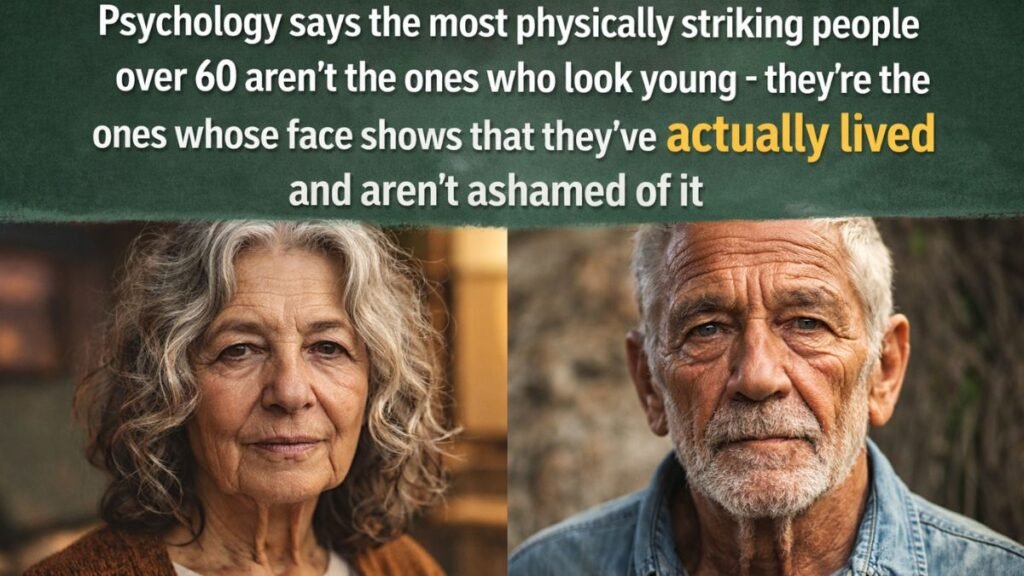

There is a quiet shift happening in how we understand beauty, especially as people grow older. For decades, youth has been idolized as the ultimate symbol of attractiveness. Smooth skin, tight features, and the illusion of timelessness have dominated cultural standards. Yet, psychology offers a different, more meaningful perspective—one that values depth over perfection. According to this view, the most physically striking people over 60 are not those who try to look younger, but those whose faces reflect a life fully lived and embraced without shame.
This idea challenges everything we have been taught to believe about aging. It invites us to look beyond surface-level beauty and recognize something far more powerful: authenticity. A face that carries the marks of experience, joy, struggle, and resilience tells a story that no cosmetic treatment can replicate. It is this story that draws people in, creating a kind of beauty that feels real, grounded, and deeply human.
The Psychology Behind Authentic Attraction
From a psychological standpoint, humans are naturally drawn to authenticity. When we encounter someone whose appearance aligns with their lived experiences, it creates a sense of trust and emotional connection. Faces that show signs of aging—lines, textures, and subtle imperfections—often communicate honesty and openness. They suggest that the person has nothing to hide, and that kind of transparency is inherently attractive.
In contrast, when someone tries too hard to erase the signs of aging, it can sometimes create a disconnect. The face may appear polished, but it lacks the emotional depth that comes from experience. Psychology suggests that we are wired to pick up on these cues, even if we are not consciously aware of it. We respond not just to what we see, but to what we feel when we look at someone.
The most striking individuals over 60 often carry themselves with a quiet confidence that comes from self-acceptance. Their faces reflect not just the passage of time, but the wisdom gained along the way. This combination of authenticity and confidence creates a powerful presence that is difficult to ignore.
Wrinkles as a Record of Life
Every line on a face tells a story. Smile lines speak of laughter and joy, while deeper creases may hint at moments of struggle or contemplation. Rather than being flaws, these features can be seen as a visual record of a person’s journey. They are evidence of a life that has been lived fully, with all its ups and downs.
Psychologically, this perspective shifts the narrative around aging. Instead of viewing wrinkles as something to be erased, they become something to be appreciated. They remind us that life is not meant to be static or unchanging. It is meant to evolve, and our appearance evolves with it.
People who embrace these changes often radiate a sense of peace. They are not fighting against time, but moving with it. This acceptance can be incredibly attractive, because it reflects a deeper understanding of what truly matters. It shows that a person values their experiences more than their appearance, and that kind of mindset is both rare and compelling.
Confidence That Comes With Age
One of the most noticeable qualities in striking individuals over 60 is confidence. This is not the loud, attention-seeking confidence often associated with youth, but a quieter, more grounded version. It comes from years of self-discovery, personal growth, and learning to let go of unnecessary insecurities.
As people age, they often become less concerned with external validation. They have already faced challenges, achieved goals, and navigated relationships. This history gives them a sense of stability that cannot be easily shaken. When someone carries themselves with this kind of confidence, it naturally enhances their physical presence.
Psychology shows that confidence is a key factor in attraction. It influences how we perceive others and how they perceive themselves. When someone is comfortable in their own skin, it creates a positive feedback loop. Their confidence makes them more attractive, and that attractiveness reinforces their confidence.
For individuals over 60, this dynamic becomes even more powerful. Their confidence is backed by decades of lived experience, making it feel genuine and deeply rooted.
The Power of Self-Acceptance
Self-acceptance is at the heart of this concept. It is the ability to look at oneself honestly and without judgment. For many people, reaching this level of acceptance takes time. It requires letting go of unrealistic standards and embracing the reality of who they are.
Those who achieve this often become the most striking individuals in any room. Their faces reflect a sense of ease and contentment that cannot be faked. They are not trying to be someone else or hold onto a version of themselves that no longer exists. Instead, they fully inhabit who they are in the present moment.
This authenticity creates a magnetic quality. People are drawn to those who are comfortable with themselves because it makes them feel more comfortable as well. It removes the pressure to be perfect and replaces it with a sense of shared humanity.
Psychologically, this kind of presence is incredibly powerful. It fosters connection, trust, and admiration, all of which contribute to a person’s overall attractiveness.
Redefining Beauty Standards
The idea that beauty is tied to youth is deeply ingrained in many cultures. However, this perspective is slowly changing. More people are beginning to recognize that beauty is not a fixed standard, but something that evolves over time.
Psychology plays a significant role in this shift. By highlighting the importance of authenticity, confidence, and self-acceptance, it challenges traditional notions of attractiveness. It suggests that true beauty is not about looking a certain way, but about being fully present in one’s own life.
For people over 60, this redefinition can be incredibly empowering. It allows them to see their aging not as a loss, but as a transformation. It encourages them to embrace their unique features and the stories they represent.
This shift also has a broader impact on society. It creates space for more diverse representations of beauty, making it easier for people of all ages to feel valued and seen.
The Emotional Depth of Lived Experience
One of the most compelling aspects of aging is the emotional depth that comes with it. Life experiences shape not only how we think and feel, but also how we express ourselves. This depth often becomes visible in a person’s face, adding layers of meaning to their appearance.
When someone has lived through different phases of life, they carry a richness that cannot be replicated. Their expressions are more nuanced, their presence more grounded, and their interactions more meaningful. This depth creates a kind of beauty that goes beyond physical features.
Psychologically, emotional depth is highly attractive because it signals maturity and understanding. It suggests that a person is capable of empathy, resilience, and meaningful connection. These qualities are often more important than physical appearance when it comes to forming lasting relationships.
For individuals over 60, this emotional richness becomes a defining characteristic. It enhances their presence and makes them stand out in a way that is both subtle and profound.
Letting Go of Shame Around Aging
A key part of this concept is the absence of shame. Many people struggle with the idea of aging because it is often associated with decline or loss. However, those who are most striking over 60 are the ones who reject this narrative.
They do not hide their age or try to disguise it. Instead, they embrace it as a natural and meaningful part of their journey. This lack of shame is incredibly freeing, both for themselves and for those around them.
Psychology suggests that shame can have a powerful impact on how we present ourselves. It can lead to self-consciousness, insecurity, and a desire to hide. When someone lets go of this shame, it allows their true self to shine through.
This authenticity is what makes them stand out. It creates a sense of integrity and wholeness that is deeply आकर्षक. It shows that they have made peace with who they are, and that kind of acceptance is something many people aspire to.
A New Way to See Aging
Ultimately, the idea that the most physically striking people over 60 are those who look like they have lived is about changing perspective. It is about moving away from a narrow definition of beauty and embracing a more holistic view.
Aging is not something to be feared or resisted. It is a natural process that brings its own kind of beauty. It adds depth, character, and meaning to a person’s appearance. When people embrace this process, they unlock a level of attractiveness that goes far beyond the surface.
This perspective encourages us to appreciate not just how people look, but who they are. It reminds us that every line, every expression, and every feature has a story behind it. And it is these stories that make us truly human.
Conclusion: The True Face of Beauty
In the end, the most striking people over 60 are not those who try to turn back time, but those who move forward with it. Their faces reflect a lifetime of experiences, and they wear those experiences with pride rather than shame.
Psychology shows us that true beauty is not about perfection, but about authenticity. It is about being fully present in one’s own life and embracing everything that comes with it. When someone does this, their attractiveness becomes undeniable.
Their face becomes more than just a reflection in the mirror. It becomes a testament to a life lived with courage, resilience, and honesty. And in a world that often values surface over substance, that kind of beauty is truly unforgettable.
FAQs
1. Why are people over 60 who embrace aging considered more attractive?
Because psychology shows that authenticity, confidence, and life experience create a deeper, more genuine form of beauty than trying to look young.
2. Do wrinkles really make someone look more appealing?
Yes, wrinkles can reflect emotions, experiences, and personality, which often makes a face more expressive and relatable.
3. How can someone feel more confident about aging?3. How can someone feel more confident about aging?
By practicing self-acceptance, focusing on inner growth, and valuing life experiences over unrealistic beauty standards.