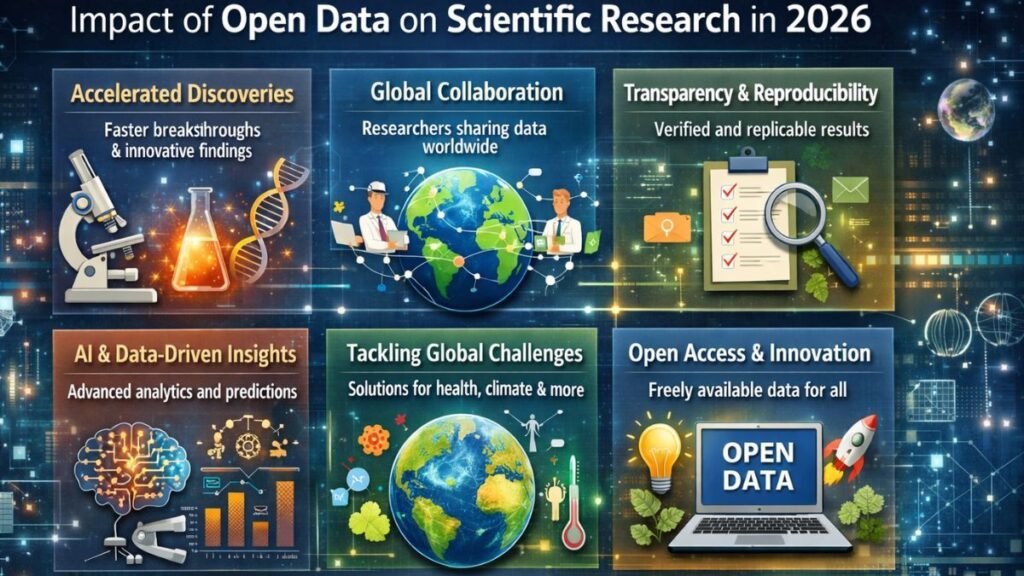

The year 2026 marks a transformative period for scientific research, where open data has evolved from a promising concept into a foundational pillar of global knowledge sharing. Researchers, institutions, and governments are increasingly recognizing that the free exchange of data accelerates discovery, improves transparency, and fosters collaboration on an unprecedented scale. In a world driven by digital innovation, open data is no longer optional—it is essential.
Scientific progress has always depended on the ability to build upon previous findings. However, traditional research models often restricted access to data behind paywalls or institutional boundaries. In contrast, open data initiatives are breaking down these barriers, allowing scientists from diverse backgrounds and regions to contribute, verify, and expand upon existing knowledge. This shift is reshaping how research is conducted, validated, and applied in real-world scenarios.
The Evolution of Open Data in Modern Science
Open data has come a long way from its early days when sharing datasets was considered an extra effort rather than a standard practice. By 2026, it has become an integral part of the scientific ecosystem. Funding agencies, academic journals, and research institutions now actively encourage or even require data sharing as part of their policies.
This evolution has been driven by the recognition that accessible data leads to more robust and reproducible research. When datasets are openly available, other scientists can replicate experiments, identify errors, and propose new interpretations. This not only strengthens the credibility of research but also accelerates innovation by reducing duplication of efforts.
Technological advancements have played a crucial role in this transformation. Cloud computing, advanced data storage solutions, and improved data management tools have made it easier than ever to share and access large volumes of information. As a result, researchers can collaborate across continents in real time, creating a truly global scientific community.
Enhancing Collaboration Across Borders
One of the most significant impacts of open data is its ability to foster collaboration beyond geographical and institutional boundaries. In 2026, scientists from different parts of the world can work together seamlessly, sharing data and insights to tackle complex challenges such as climate change, pandemics, and energy sustainability.
Open data platforms enable interdisciplinary research, bringing together experts from various fields to address multifaceted problems. For instance, a climate scientist can collaborate with data analysts, engineers, and policymakers to develop comprehensive solutions. This level of collaboration was difficult to achieve in the past due to limited access to data and communication barriers.
Moreover, open data empowers researchers in developing countries who may lack access to expensive resources. By providing free access to high-quality datasets, it levels the playing field and allows talented individuals to contribute to global scientific progress regardless of their location or financial constraints.
Driving Innovation and Accelerating Discoveries
Innovation thrives in environments where information flows freely. Open data acts as a catalyst for creativity, enabling researchers to explore new ideas and develop novel solutions. In 2026, many groundbreaking discoveries are emerging from the reuse and reinterpretation of existing datasets.
By eliminating the need to collect data from scratch, researchers can focus more on analysis and experimentation. This not only saves time and resources but also opens up opportunities for unexpected insights. For example, data collected for one purpose may reveal patterns or trends that are relevant to entirely different fields.
The integration of artificial intelligence and machine learning with open data is further amplifying its impact. Advanced algorithms can analyze vast datasets quickly and identify correlations that might be missed by human researchers. This synergy between technology and open data is driving a new era of scientific breakthroughs.
Improving Transparency and Research Integrity
Transparency is a cornerstone of credible scientific research, and open data plays a vital role in achieving it. In 2026, the availability of datasets allows for greater scrutiny and validation of research findings. This helps reduce the risk of errors, biases, and even fraudulent practices.
When data is openly accessible, peer review becomes more effective, as reviewers can examine the underlying data rather than relying solely on reported results. This enhances the overall quality of research and builds trust within the scientific community and the public.
Open data also promotes accountability. Researchers are more likely to adhere to ethical standards when they know their data will be accessible to others. This creates a culture of responsibility and encourages best practices in data collection and analysis.
Challenges and Ethical Considerations
Despite its many benefits, open data is not without challenges. One of the primary concerns is data privacy, particularly in fields such as healthcare and social sciences. Ensuring that sensitive information is protected while still making data accessible requires careful planning and robust security measures.
Another challenge is the standardization of data formats. Inconsistent data structures can make it difficult to integrate and analyze datasets from different sources. Efforts are being made to develop universal standards, but achieving widespread adoption remains a work in progress.
There is also the issue of data misuse. Open access does not guarantee responsible use, and there is a risk that data could be misinterpreted or used for purposes that were not originally intended. Addressing these concerns requires clear guidelines, education, and ongoing monitoring.
The Role of Governments and Institutions
Governments and research institutions play a crucial role in promoting and supporting open data initiatives. In 2026, many countries have implemented policies that encourage data sharing and provide funding for open data infrastructure.
Publicly funded research is increasingly required to make its data available to the public, ensuring that taxpayers benefit from the knowledge generated. This approach not only enhances transparency but also maximizes the impact of research investments.
Institutions are also investing in training programs to equip researchers with the skills needed to manage and share data effectively. By fostering a culture of openness, they are helping to drive the widespread adoption of open data practices.
The Future of Open Data in Scientific Research
Looking ahead, the role of open data in scientific research is expected to grow even further. As technology continues to advance, new tools and platforms will make data sharing more efficient and accessible. The integration of blockchain technology, for example, could provide secure and transparent ways to track data usage and ownership.
In 2026 and beyond, open data is likely to become a standard expectation rather than an exception. Researchers who embrace this approach will be better positioned to contribute to global knowledge and make meaningful impacts in their fields.
The continued expansion of open data will also lead to greater public engagement with science. When data is accessible, citizens, educators, and policymakers can better understand and participate in scientific discussions. This democratization of knowledge has the potential to inspire innovation and drive societal progress.
Conclusion: A New Era of Scientific Discovery
The impact of open data on scientific research in 2026 is profound and far-reaching. By promoting collaboration, enhancing transparency, and accelerating innovation, it is transforming the way science is conducted and shared.
While challenges remain, the benefits of open data far outweigh the obstacles. With continued support from governments, institutions, and the scientific community, open data will continue to shape the future of research and unlock new possibilities for discovery.
As we move forward, embracing open data is not just about improving science—it is about creating a more connected, informed, and innovative world.