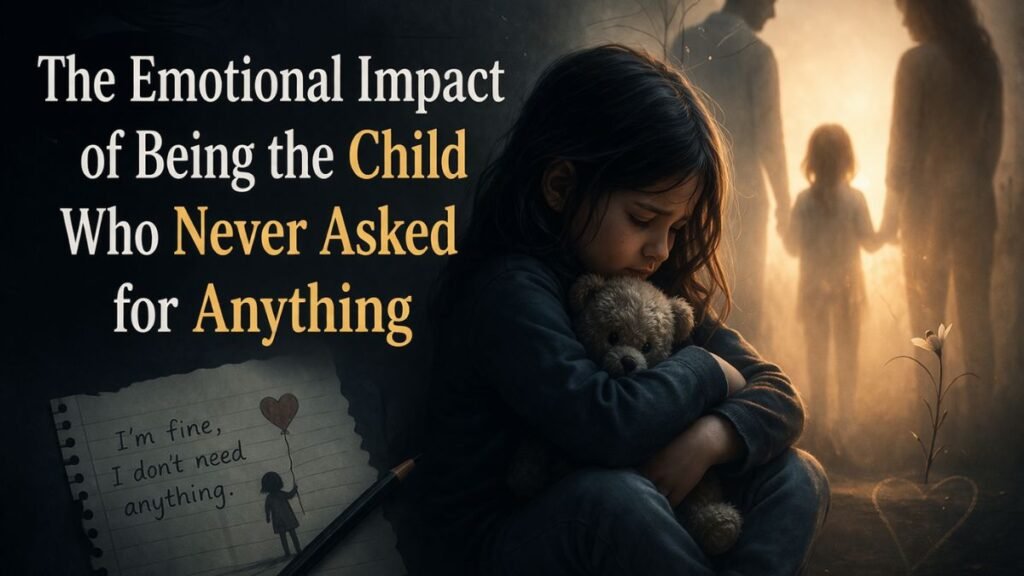

In every family, there is one child who is labeled the “most sensible,” the “quietest,” or the “easiest.” They never make demands, keep their needs to a minimum, and never bother others. At first glance, this seems like a positive trait; however, the hidden emotional truth behind it often goes unnoticed. Such a child gradually learns that their own desires and emotions are not as important as those of others. This lesson eventually leaves a profound impact on their personality and relationships.
The Suppressed “Self” of Childhood
When a child repeatedly suppresses their own needs, they begin to drift away from their “self”—their true identity. They come to believe that if they were to ask for something or express their feelings, they would be perceived as a burden. Consequently, they learn to remain silent and endure everything on their own.
This silence gradually becomes a habit. Though they seem collected and rational on the outside, there are many thoughts and emotions inside that go unvoiced.

The Practice of Repressing Feelings
When they mature into adults, these individuals find it difficult to recognize and verbalize their emotions. They may feel angry, sad, or frustrated, yet they cannot put these emotions into words.
Over time, this emotional pressure accumulates internally, occasionally erupting suddenly in the form of stress, anxiety, or profound loneliness. They themselves often fail to understand what, exactly, is troubling them.
The Illusion of Being “Low-Maintenance”
Often, these individuals perceive themselves as “low-maintenance”—people with minimal needs. They believe they do not require much attention or care.
However, the truth is that they have simply stopped recognizing their own needs. They continue to ignore their emotions in an effort to project an image of strength, whereas, deep down, they crave just as much love, understanding, and support as anyone else.

Challenges in Relationships
As these children grow up and enter into relationships, they frequently encounter difficulties in expressing their needs. They are unable to speak openly with their partners or friends and often strive only to give, without ever asking for anything in return.
This creates an imbalance in their relationships. The other person remains completely unaware of what their needs are, and gradually, emotional distance or misunderstandings begin to grow.
Losing One’s Sense of Self
The “child who never asks for anything” often ends up losing one’s true self. Such a person cannot recognize his or her likes and dislikes, desires and other aspirations in life.
One continues living in order to meet the expectations of other people and suppresses his/her true desires. All this leads to a strong feeling of emptiness and lack of fulfillment in life.
The Beginning of Healing: Understanding Yourself
The first step toward breaking free from this situation is—understanding yourself.And this calls for recognition that you, too, have needs of your own and that your feelings also matter equally.
You must take things slow and gradually learn to recognize and express your feelings. You can start out by stating your preferences and even requesting assistance.
Learning to Love Yourself
It is crucial to acknowledge that inner child within you and give them the love they were deprived of during their childhood. Being kind to yourself, accepting your emotions, and prioritizing your own well-being—all these steps are integral parts of the healing process.
When you begin to value yourself, both your relationships and your life begin to improve.
Conclusion: Your Voice Matters
While being the “child who never asks for anything” may have seemed like the easier path at the time, its impact lingers for a long time. Now is the time to find your voice, understand your needs, and express them without fear.
Remember: your feelings and your needs are just as important as anyone else’s. Listening to and understanding yourself is the true beginning of freedom.
FAQS
Q1. Why do some children never ask for anything?
A. They may fear rejection, want to avoid conflict, or feel their needs don’t matter.
Q2. How does this affect adulthood?
A. It leads to emotional suppression, low self-worth, and difficulty expressing needs.
Q3. Is being “undemanding” a problem?
A. It can be harmful if it means ignoring your own emotional needs.
Q4. How can someone break this pattern?
A. By practicing self-awareness, communication, and gradually expressing needs.
Q5. Can this behavior be unlearned?
A. Yes, with conscious effort, support, and sometimes therapy, it can be changed.