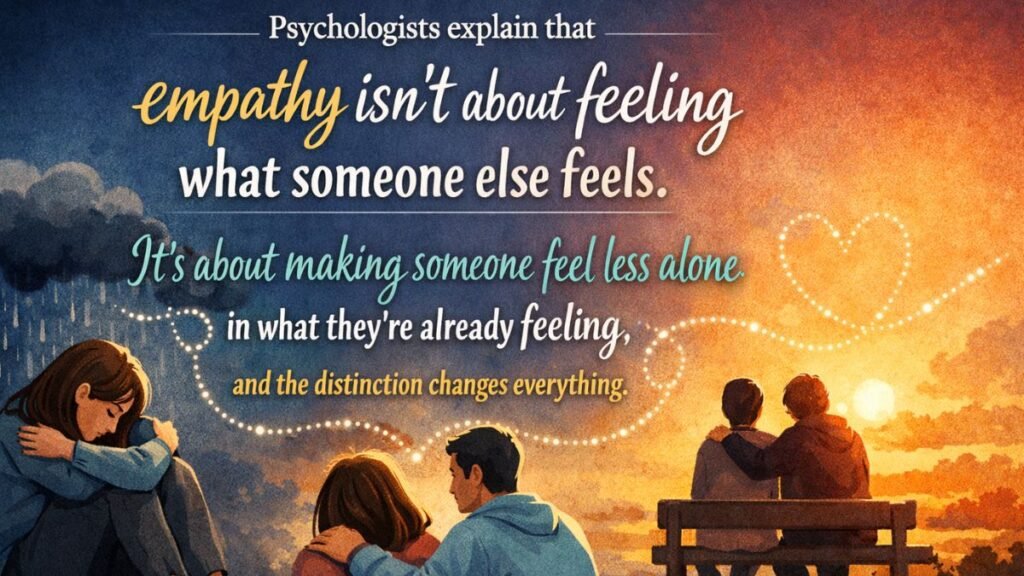

For a long time, empathy has been misunderstood as the ability to step into someone else’s emotional world and feel exactly what they feel. It is often described as “putting yourself in someone else’s shoes,” as if the goal is to mirror their emotions perfectly. While this idea sounds compassionate, psychologists suggest that it misses the deeper truth. Empathy is not about duplicating another person’s feelings. Instead, it is about helping them feel less alone in what they are already experiencing.
This subtle shift in understanding may seem small at first, but it changes everything about how we connect with others. It moves empathy away from emotional imitation and toward emotional presence. It reminds us that what people need most in difficult moments is not someone to feel for them, but someone to stand with them.
The Misconception of “Feeling the Same”
Many people believe that being empathetic means absorbing another person’s emotions as if they were their own. If someone is sad, we think we should feel sad too. If they are anxious, we try to tap into that same anxiety. While this approach may come from a place of care, it can actually create distance rather than connection.
When we focus too much on matching someone else’s feelings, we shift attention away from them and onto ourselves. We begin to analyze whether we are feeling “enough” or “correctly,” which can make the interaction less genuine. The person who is struggling may even feel misunderstood if our response seems forced or exaggerated.
Psychologists emphasize that empathy is not about emotional performance. It is not about proving that we can feel deeply. Instead, it is about creating a space where another person feels safe enough to express what they are going through without fear of judgment or dismissal.
The Power of Presence
At its core, empathy is about presence. It is about being fully there with someone, without trying to fix, change, or control their emotions. When someone is going through a difficult time, what they often need most is not advice or solutions, but companionship.
Making someone feel less alone does not require grand gestures or perfect words. Sometimes, it is as simple as listening without interrupting, maintaining eye contact, or offering a quiet acknowledgment of their feelings. These small acts communicate something powerful: “You are not alone in this.”
Presence also means resisting the urge to compare experiences. It is easy to respond to someone’s pain by saying, “I’ve been through something similar,” but this can unintentionally shift the focus away from them. True empathy keeps the spotlight on the person who is sharing, allowing their experience to be seen and heard on its own terms.
Why Feeling Less Alone Matters
Loneliness is one of the most difficult aspects of emotional pain. When people feel isolated in their experiences, their struggles can seem heavier and more overwhelming. Even in a room full of people, someone can feel completely alone if they believe no one truly understands them.
Empathy addresses this loneliness directly. By simply being present and acknowledging someone’s feelings, we help lighten the emotional burden they carry. We do not need to remove their pain to make a difference. Instead, we reduce the sense of isolation that often accompanies it.
Psychologically, this sense of connection can be incredibly healing. It reassures people that their emotions are valid and that they are not facing their challenges by themselves. This validation can make it easier for them to process their feelings and move forward.
The Difference Between Empathy and Sympathy
Understanding empathy also requires distinguishing it from sympathy. Sympathy often involves feeling sorry for someone or viewing their situation from a distance. It can create a subtle imbalance, where one person is seen as the “helper” and the other as the “one in need.”
Empathy, on the other hand, is about equality. It is about meeting someone where they are, without placing ourselves above or outside their experience. Instead of saying, “I feel bad for you,” empathy says, “I’m here with you.”
This difference may seem small, but it has a profound impact on how people feel. Sympathy can sometimes come across as pity, which may make someone feel misunderstood or even diminished. Empathy, by contrast, fosters connection and mutual respect.
The Courage to Stay Present
Being empathetic is not always easy. It requires the courage to sit with uncomfortable emotions, both our own and those of others. When someone shares their pain, our natural instinct may be to fix it or make it go away. We might offer advice, try to find solutions, or change the subject to something more positive.
However, true empathy asks us to resist these impulses. It invites us to stay present, even when we do not have answers. This can feel uncomfortable, but it is also where the most meaningful connections are formed.
Staying present also means accepting that we cannot fully understand another person’s experience. We can listen, we can care, and we can support, but we do not need to fully “become” them to be empathetic. In fact, acknowledging this gap can make our empathy more genuine.
How Empathy Strengthens Relationships
When people feel understood and supported, their relationships naturally become stronger. Empathy creates a sense of trust, allowing individuals to open up more freely and honestly. It builds a foundation where both people feel valued and respected.
In close relationships, such as friendships, families, or romantic partnerships, empathy plays a crucial role in maintaining emotional intimacy. It helps resolve conflicts, reduces misunderstandings, and fosters a deeper sense of connection.
Even in everyday interactions, empathy can make a difference. A simple moment of understanding can transform a conversation, turning it from routine to meaningful. Over time, these moments add up, shaping the quality of our relationships and the way we experience connection.
Practicing Empathy in Daily Life
Developing empathy does not require special training or extraordinary skills. It begins with small, intentional actions. Listening attentively, asking open-ended questions, and responding with genuine care are all ways to practice empathy.
It also involves being mindful of our own reactions. When someone shares their feelings, we can pause and ask ourselves whether we are truly focusing on them or shifting the conversation toward ourselves. This awareness helps us stay grounded in the purpose of empathy.
Another important aspect of empathy is validation. This does not mean agreeing with everything someone says, but rather acknowledging their feelings as real and important. Phrases like “That sounds really difficult” or “I can see why you feel that way” can go a long way in making someone feel understood.
The Transformative Impact of This Perspective
Understanding empathy as the act of making someone feel less alone changes the way we approach human connection. It removes the pressure to feel the “right” emotions and replaces it with a focus on being present and supportive.
This perspective also makes empathy more accessible. It shows that we do not need to have the same experiences or emotions as someone else to connect with them. What matters is our willingness to listen, to care, and to stand beside them in their moment of need.
Over time, this approach can transform not only our relationships but also our own sense of well-being. When we practice empathy, we create a culture of understanding and compassion, both within ourselves and in the world around us.
Conclusion: Changing Everything Through Connection
The idea that empathy is about making someone feel less alone rather than feeling exactly what they feel is a powerful shift in understanding. It challenges long-held assumptions and opens the door to deeper, more meaningful connections.
By focusing on presence rather than imitation, we create space for genuine understanding. We allow others to feel seen, heard, and supported without the need for perfection or performance. In doing so, we redefine what it means to truly care.
In a world where many people struggle with loneliness and emotional isolation, this form of empathy has the potential to change everything. It reminds us that sometimes, the most powerful thing we can offer is not our ability to feel for someone, but our willingness to be there with them.
FAQs
1. What is the true meaning of empathy according to psychology?
Empathy is about helping someone feel less alone in their emotions, not feeling exactly what they feel.
2. How is empathy different from sympathy?
Empathy involves being present and understanding, while sympathy often means feeling sorry for someone from a distance.
3. How can I practice empathy in daily life?
By listening actively, validating others’ feelings, and being present without trying to fix their problems.