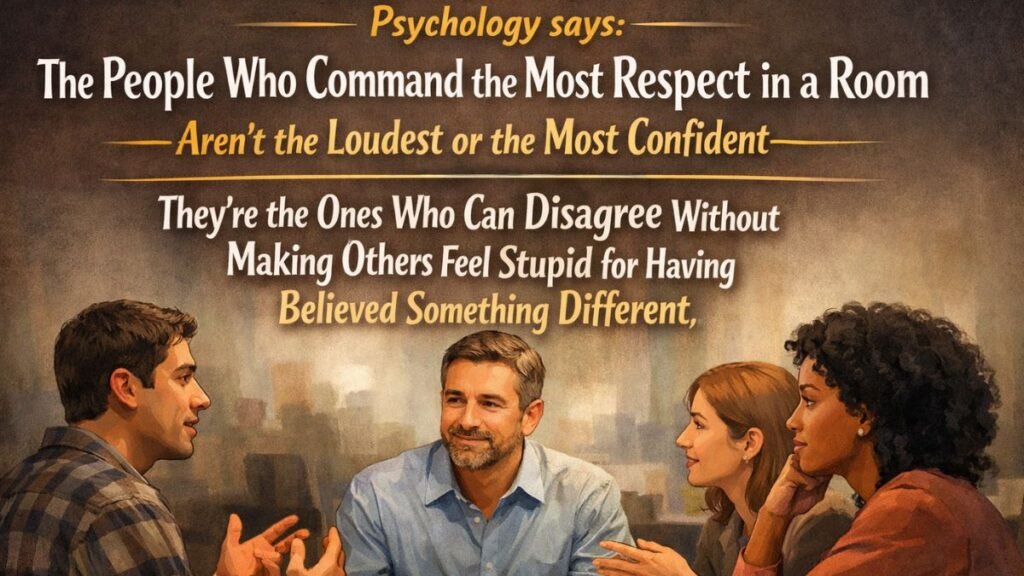

In many social settings, it is easy to assume that the people who command the most respect are those who speak the loudest, carry the strongest opinions, or display unwavering confidence. Society often celebrates boldness and dominance, equating them with leadership and influence. However, psychology offers a different perspective—one that is far more subtle yet profoundly impactful.
True respect is rarely built on volume or force. Instead, it emerges from the ability to navigate differences with grace. The individuals who earn genuine admiration in a room are not those who overpower conversations, but those who can disagree thoughtfully without diminishing others. They create an environment where ideas can be challenged without people feeling attacked, and this quality quietly sets them apart.
Why Respect Is Not About Being the Loudest Voice
Loudness often creates visibility, but it does not guarantee respect. When someone dominates a conversation or pushes their opinions aggressively, it may capture attention, but it can also create discomfort. People may comply or stay silent, not because they are convinced, but because they feel overpowered.
Psychologically, respect is tied to how safe people feel around someone. When individuals sense that their thoughts will be dismissed or ridiculed, they withdraw. On the other hand, when they feel heard and valued, they are more open, engaged, and receptive. This is why quieter individuals who communicate thoughtfully often command deeper respect than those who rely solely on confidence or authority.
Respect, in this sense, is not about controlling the room—it is about influencing it in a way that allows others to feel secure in expressing themselves.
The Art of Disagreeing Without Disrespect
Disagreement is an inevitable part of human interaction. People come from different backgrounds, experiences, and perspectives, which naturally shape their beliefs. The challenge is not avoiding disagreement, but handling it in a way that preserves dignity on both sides.
Those who are truly respected understand this balance. They know how to question ideas without questioning the intelligence of the person holding them. Instead of saying, “That’s wrong,” they might approach the conversation with curiosity, asking, “What led you to think that?” This subtle shift changes the tone from confrontation to exploration.
Psychologically, this approach reduces defensiveness. When people do not feel attacked, they are more willing to listen and reconsider their views. It transforms disagreement from a battle into a dialogue, where both sides have the opportunity to learn.
Emotional Intelligence as the Foundation of Respect
At the core of respectful disagreement lies emotional intelligence. This includes the ability to recognize one’s own emotions, understand the feelings of others, and respond appropriately in social situations. Individuals with high emotional intelligence are more aware of how their words and tone impact others.
They understand that being right is not always the most important goal. Maintaining relationships, preserving trust, and fostering mutual understanding often matter more. This awareness allows them to communicate their perspectives without causing unnecessary harm.
Empathy plays a crucial role here. When someone can step into another person’s perspective, even if they do not agree with it, they create a sense of connection. This connection builds respect, because it shows that the conversation is not about winning, but about understanding.
Why Making Others Feel “Stupid” Backfires
When someone is made to feel unintelligent or embarrassed for their beliefs, the natural reaction is defensiveness. Instead of reconsidering their position, they are more likely to double down on it. This is a well-known psychological response, where the ego seeks to protect itself from perceived threats.
In such situations, even if one person is technically correct, they lose something more valuable—respect. People may avoid engaging with them in the future, or they may silently resent their approach. Over time, this damages relationships and limits influence.
On the other hand, when disagreement is handled with respect, it leaves space for growth. People are more likely to reflect on their ideas and consider alternative perspectives. In this way, respect becomes a more powerful tool for influence than force or superiority.
The Difference Between Confidence and Respect
Confidence is often visible, while respect is felt. A confident person may speak assertively and present their ideas with certainty, but this does not automatically earn admiration. Respect is built through consistent behavior that values others, not just oneself.
The most respected individuals often combine quiet confidence with humility. They are secure enough in their beliefs to express them, but also open enough to consider that they might be wrong. This balance makes them approachable and trustworthy.
Psychologically, this creates what can be described as “earned authority.” People listen to them not because they are the loudest, but because they have demonstrated fairness, thoughtfulness, and integrity in their interactions.
Creating a Space Where Ideas Can Coexist
One of the most powerful traits of respected individuals is their ability to create an environment where multiple perspectives can coexist. They do not see disagreement as a threat, but as an opportunity for deeper understanding.
In such environments, people feel encouraged to share their thoughts without fear of judgment. This leads to richer discussions, better problem-solving, and stronger relationships. It also fosters a sense of belonging, as individuals feel that their voices matter.
From a psychological standpoint, this kind of environment reduces anxiety and increases engagement. People are more likely to contribute when they know they will be treated with respect, even if their ideas are challenged.
The Role of Self-Awareness in Respectful Communication
Self-awareness is another key element in earning respect. It involves understanding one’s own biases, triggers, and communication style. Without this awareness, it is easy to unintentionally come across as dismissive or condescending.
Respected individuals often take a moment to consider how their words might be received. They are mindful of their tone, body language, and choice of language. This intentionality allows them to express disagreement without creating unnecessary tension.
Self-awareness also helps in recognizing when to step back. Not every disagreement needs to be pursued, and not every point needs to be proven. Sometimes, choosing understanding over correction is the more respectful path.
Why Respectful Disagreement Builds Lasting Influence
Influence is not just about persuading others in the moment; it is about building trust over time. When people feel respected, they are more likely to value and remember the interaction. This creates a foundation for long-term influence.
Respectful disagreement shows maturity and emotional control. It signals that a person is capable of handling complexity without resorting to negativity. This leaves a lasting impression, often more powerful than any single argument.
Over time, individuals who consistently demonstrate this quality become trusted voices in their circles. People seek their opinions, not because they always agree with them, but because they know the conversation will be constructive.
Conclusion: Respect Is Earned Through How You Disagree
The ability to disagree without making others feel small is one of the most underrated skills in human interaction. It requires patience, empathy, and self-awareness—qualities that are not always visible, but deeply felt.
Psychology reminds us that respect is not about dominance or certainty. It is about creating a space where ideas can be shared, challenged, and refined without damaging the people behind them. Those who master this skill do not just win arguments; they win trust, admiration, and lasting respect.
In a world where being loud is often mistaken for being influential, the true power lies in quiet confidence and thoughtful communication. The most respected people in any room are not those who need to prove others wrong, but those who can disagree in a way that makes everyone feel valued.
FAQs
Why do respectful people gain more respect than loud ones?
Because they make others feel heard and valued, which builds trust and genuine admiration.
What is respectful disagreement?
It means expressing a different opinion without insulting or belittling the other person.
How can I disagree without offending someone?
Use calm language, show empathy, and focus on ideas instead of attacking the person.